The Internet Is Having a Normal One (Please Rotate Your Secrets)
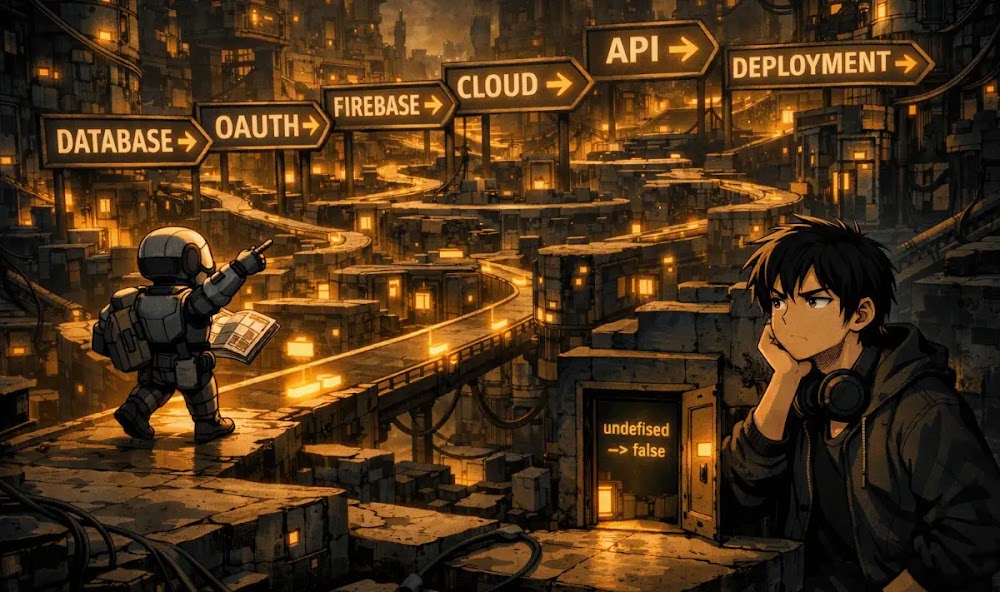
There is a very specific moment in a developer's life when debugging stops being a technical activity and becomes a spiritual journey.
You start the day with a perfectly reasonable plan.
Fix a bug. Review some code. Deploy a change. Maybe finish work at a reasonable hour and remember that you're a human being with hobbies, a family, and a biological need for sunlight.
Then something breaks.
You investigate.
You find another problem.
You investigate that problem.
And suddenly, you're three layers deep into someone else's infrastructure, reading a security disclosure published at an ungodly hour, wondering whether the universe is trying to tell you something.
This week, I got that message.
Loudly.
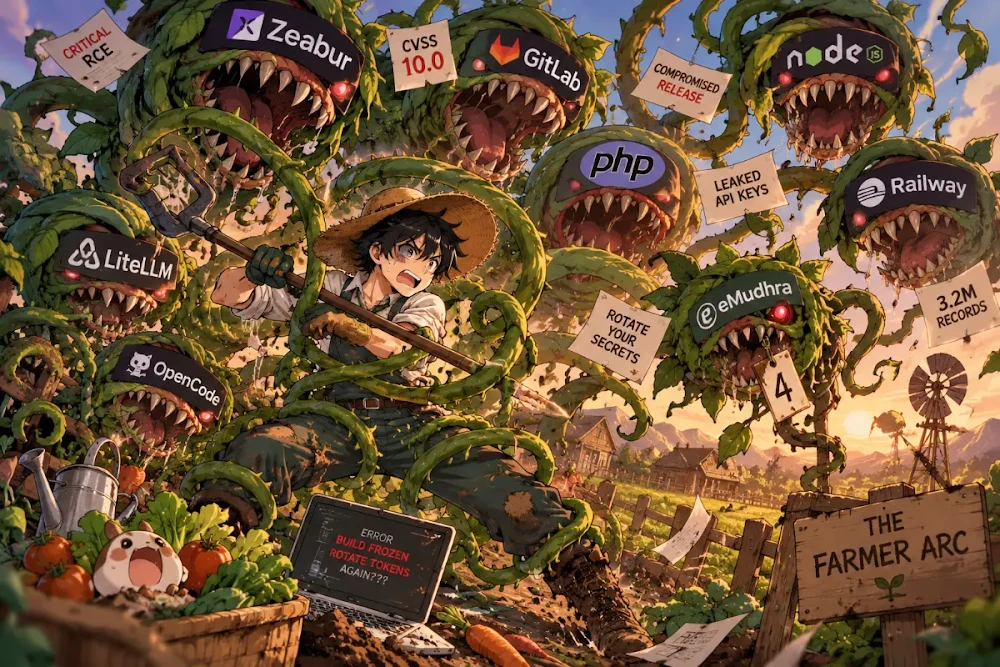
I spent a significant chunk of my week trying to understand what the hell was happening across the software infrastructure we depend on. PHP had critical vulnerabilities. Node.js needed emergency security updates. GitLab dropped a CVSS 10.0 vulnerability. LiteLLM published a malicious release. OpenCode users had to worry about unauthorized AI charges.
Then a certificate authority situation revealed private keys so weak that one of them was literally the number 4.
Four.
Someone's cryptographic security was being held together by an integer you could use to count the number of functioning brain cells remaining in the industry.
And just when I thought the week couldn't get any more ridiculous, two cloud deployment platforms entered the conversation.
Zeabur announced it was winding down after two security breaches.
Railway disclosed unauthorized access to internal systems, recommended rotating environment variables, and froze new builds and deployments while investigating.
So there I was, trying to do my actual job, while the infrastructure underneath modern software development was auditioning for a disaster documentary.
I could have been farming.
I could have been growing tomatoes.
Instead, I was reading incident reports.
The tomatoes are looking increasingly attractive.
Episode 1: PHP and Node.js Have Decided We Haven't Suffered Enough
Let's begin with the programming languages that help keep the internet running.
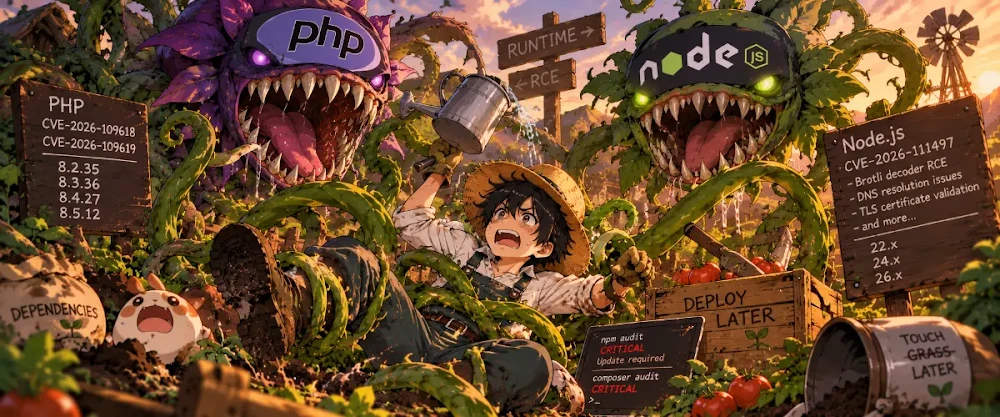
On October 21, PHP released emergency updates addressing two critical vulnerabilities that could allow unauthenticated remote code execution. The affected releases included PHP 8.2.35, 8.3.36, 8.4.27, and 8.5.12.
The PHP project explicitly recommended immediate updates, stating that no complete mitigation was available other than upgrading.
Source: PHP's October 2026 security advisory.
Then Node.js followed with its own security releases for the 22.x, 24.x, and 26.x release lines.
Among the vulnerabilities was a Brotli decoder flaw that could permit remote code execution, alongside issues involving DNS resolution, TLS certificate validation, and other components.
Source: Node.js security releases, October 21.
Now, I understand that software has bugs.
I write software. I have personally participated in the ancient ritual of changing one line of code and discovering that three unrelated things have stopped working.
But there is something humbling about realizing that even the runtime underneath your application needs emergency maintenance.
You can validate every request, write tests, use prepared statements, follow your architecture, and maintain a codebase so clean that your future self might actually understand it.
Then a vulnerability in the runtime arrives and reminds you that your application is only one layer of a much larger system.
Your beautiful code is sitting on top of other people's beautiful code, which is sitting on top of other people's dependencies, which are sitting on top of an operating system that probably has seventeen updates waiting.
Software engineering is just a tower of people saying, "This should be fine."
Until it isn't.
And then everyone gets to update their dependencies.
Again.
Episode 2: GitLab Received a CVSS 10.0 and Chose Violence

GitLab also published a critical security release on October 21.
CVE-2026-110264 involved an integer overflow in regular-expression compilation that could, under certain conditions, allow unauthenticated remote code execution on affected self-managed installations.
The vulnerability received a CVSS score of 10.0.
Source: GitLab's critical patch release.
A ten out of ten.
Not a ten out of ten in the "excellent documentation, would recommend" sense.
A ten out of ten in the "please patch your infrastructure before someone else starts making architectural decisions for you" sense.
And GitLab is not just a website where your code lives.
Depending on the setup, it may have access to repositories, build runners, deployment credentials, package registries, and systems that ship software directly to production.
Compromise the infrastructure responsible for building and delivering software, and the potential impact extends well beyond the infrastructure itself.
This is why I find security incidents in developer platforms particularly concerning.
We build our applications using these tools. We store our source code in them. We trust their pipelines to produce the artifacts that eventually run in production.
When those systems fail, the consequences can travel a long way.
Anyway, if you're running a self-managed GitLab instance, please check the official advisory and upgrade to a fixed release.
If you're using a managed instance, verify the provider's status and applicable guidance.
And if your first reaction to a critical vulnerability is "I'll deal with that after this sprint," I hope your sprint has a very good lawyer.
Episode 3: Someone Managed to Turn a Software Release Into Malware Delivery

Now we arrive at LiteLLM.
On October 21, attackers compromised its release pipeline and published a malicious litellm==1.107.0 package to PyPI. Certain Docker image tags were also affected.
The malicious artifacts were designed to steal credentials and load additional remote code.
The package was available for approximately two hours, while affected Docker tags remained compromised for a longer period.
Source: LiteLLM's official incident report.
Here's what makes this incident particularly unpleasant.
The official source tag did not contain the malicious files.
The attackers manipulated the release process to build artifacts from an attacker-controlled lookalike repository.
In other words, the code in the official repository and the code in the artifact users downloaded were not the same thing.
The release pipeline had become the attack vector.
And before anyone says, "Well, that's why we review our code," the incident demonstrates precisely why source review alone cannot establish the integrity of a release.
You can inspect a repository until your eyes turn into pull-request comments. If the system that builds and publishes the package can be manipulated, your review might have nothing to do with the artifact that reaches production.
The investigation also described how compromised developer credentials and workflow permissions were used to bypass protections and publish the malicious release.
Security controls existed. The attacker found a way through several of them.
This is not an argument that code review is useless. It's an argument that release integrity requires more than code review.
You need to know what source was built, which workflow built it, who authorized the release, and whether the artifact corresponds to the intended source.
Because apparently, even npm install and pip install need the same level of trust issues as modern dating.
You thought you knew what you were getting.
Turns out, somebody changed the package while you weren't looking.
Episode 4: Your AI API Bill Has Been Compromised

OpenCode Console also disclosed a security incident involving stored third-party API keys.
The breach affected approximately 1.4% of Console users, and some users reported unauthorized AI usage and unexpected charges.
Source: TechCrunch's coverage of the OpenCode incident.
Let's be clear: this was an incident involving OpenCode Console, the hosted service that stored provider credentials. It was not a blanket compromise of the entire open-source OpenCode application.
But the underlying lesson applies to every developer tool that stores credentials.
An API key is not merely a configuration value.
It's permission to do something.
Sometimes that means reading a database. Sometimes it means deploying infrastructure. Sometimes it means making requests to an AI provider and charging the account holder.
The convenience is obvious. You connect your provider, save your credentials, and get on with your work.
The security responsibility is less glamorous.
You need proper access controls, careful secret handling, monitoring, revocation, and a response plan if those credentials are exposed.
Otherwise, you get the privilege of paying for someone else's experiments.
Imagine waking up to find your API spending has gone through the roof because a stranger decided your billing account was their personal GPU budget.
At that point, the only thing you should be generating is an invoice dispute.
Episode 5: The Internet's Certificate Authority Had a Private Key of 4
I am not making this up.
Cloudflare disclosed that private keys associated with eight eMudhra intermediate certificate authorities were compromised because the keys were weak.
One of the private values was 4.
Source: Cloudflare's eMudhra certificate compromise report.
If you're unfamiliar with certificate authorities, they're part of the infrastructure browsers use to establish trust in website identities.
When you visit a website over HTTPS, your browser checks the certificate chain and other relevant properties before deciding whether to trust the connection.
That system depends on certificate-signing private keys remaining secret.
If someone can recover an intermediate CA's private key, they may be able to forge certificates for hostnames that chain to that authority, subject to applicable validation and revocation controls.
This is not the kind of situation where you clear your browser cache and hope for the best.
It's a problem with the trust infrastructure itself.
And no, this doesn't mean the underlying cryptographic algorithm suddenly became insecure.
It means the actual keys were weak enough to undermine the assumptions the algorithm depends on.
You can have a secure algorithm, a correctly implemented TLS stack, and a perfectly valid-looking certificate.
If the private key is predictable, the whole arrangement is in trouble.
This is the cryptographic equivalent of installing an expensive security system and leaving the master key under a plant pot.
Except the plant pot is the integer 4.
At this point, I would like to formally request that whoever is responsible for generating production cryptographic keys be prohibited from counting.
Episode 6: Zeabur Got Breached Twice and Is Now Winding Down

Just when I thought we had enough material for a cybersecurity bingo card, Zeabur announced it was shutting down.
The platform reported two security incidents, one in August and another in October. It subsequently announced that some services would begin shutting down on December 1, 2026, with shared clusters and dedicated servers scheduled to shut down by December 31.
Source: Cybernews: Zeabur is shutting down after two breaches.
The October incident was particularly serious.
According to Zeabur's preliminary report, 321,810 accounts were affected, and more than 3.2 million environment-variable records were accessed. The exposed records included names and values, potentially containing credentials and other sensitive configuration.
Source: Zeabur's October incident report.
The first incident had already exposed weaknesses in how the platform isolated customer workloads and internal infrastructure.
The second incident involved long-lived administrative credentials and other secrets stored in plaintext. Zeabur's report also described overprivileged accounts, inadequate isolation, and gaps in detection and audit logging.
One particularly troubling detail: some administrative credentials that should have been addressed after the first incident were not included in the earlier rotation.
The company acknowledged that its earlier statement about internal administrative keys being rotated or disabled was incomplete.
Now, to be fair, Zeabur's founder described several factors behind the decision to wind down, including infrastructure complexity, operational challenges, and the consequences of the two security incidents. It would be inaccurate to claim the breaches alone caused the shutdown.
But the practical consequences are clear.
Customers now have to think about compromised credentials, potentially exposed data, and moving their applications before the infrastructure disappears.
This is the kind of thing that turns a cloud hosting decision into a full-blown migration project.
You picked a platform because deploying software was supposed to be easy.
Now you're backing up databases, rebuilding environments, rotating keys, checking logs, and figuring out where everything is going next.
The cloud is somebody else's computer until that somebody announces an end-of-life date.
Then it becomes your problem again.
Episode 7: Railway Told Us to Rotate Our Secrets. Then Froze New Builds.

And this is the part that hit a little closer to home.
Railway disclosed suspicious activity on October 21 involving systems that store customer environment variables.
The company said an unauthorized third party may have accessed encrypted environment variables and obtained decrypted values for some of them.
Its initial recommendation was straightforward: rotate environment variables, including API keys and private registry credentials, and review service logs for suspicious activity.
Then came the operational consequence.
Railway paused all new builds and deployments while investigating.
Source: Railway's October 21 security disclosure.
So, to summarize the developer experience:
A security incident happens.
You're told to rotate your credentials.
You rotate your credentials.
You need to deploy your changes so the application uses the new credentials.
New builds are paused because the platform is investigating the security incident.
You stare at the deployment dashboard.
Beautiful.
Absolutely beautiful.
The very action you're supposed to take to recover from a potential credential exposure may require the deployment capability that has temporarily been disabled as part of the response.
Now, I want to be fair to Railway here. Pausing builds was a deliberate containment measure, not an arbitrary decision to inconvenience developers.
Its preliminary report explains that the team disabled build infrastructure to limit the attack's scope while investigating. Existing applications remained online, even though customers couldn't roll out new versions during the freeze.
The report also says the attacker accessed a subset of internal systems, and that at most 1.85% of workspaces had environment variables potentially compromised. Railway recommended that customers who signed up before October 21 rotate their stored keys as a precaution.
Source: Railway's preliminary incident report.
The investigation also describes how Railway worked with upstream providers to revoke potentially exposed keys, rotated its own credentials, rebuilt internal tooling from validated source, and accelerated a migration to a newer generation of builder infrastructure.
At the time of the follow-up report, builds had been restored.
So the freeze wasn't permanent, and it wasn't evidence that every customer's application had been compromised.
But it did expose a real operational dependency.
When your deployment platform is part of your recovery path, an incident affecting that platform can complicate the recovery itself.
This is why incident response isn't just about identifying the compromised credential. You also need to think about how customers can safely rotate credentials, redeploy applications, and verify that the new configuration is working when parts of the platform are unavailable.
And yes, sometimes the correct security decision is to pause the machinery.
That doesn't make the developer experience any less absurd.
You can understand why the fire department shut off the electricity and still be annoyed that your refrigerator has stopped working.
Both things can be true.
Episode 8: I Wanted to Fix Software. I Got an Infrastructure Crisis Instead.

Here's what made this week different from simply reading a collection of alarming headlines.
I wasn't observing all of this from a comfortable distance.
I was trying to work.
When the infrastructure and services you depend on start having security incidents, the work changes. You spend time understanding advisories, checking exposure, figuring out which systems are affected, and deciding whether a deployment or dependency needs attention.
Some of that work is essential. Some of it is investigation. Some of it is waiting for information from people who are also trying to figure out what happened.
And some of it is staring at a screen wondering why your perfectly reasonable plan for the day has turned into a forensic investigation.
You might have a feature to implement, a bug to fix, or a deployment to finish.
Instead, you're reading about a compromised package, a cloud platform freezing builds, or a provider asking you to rotate credentials.
Your task list doesn't disappear just because the internet is having a crisis.
It simply gets company.
And the frustrating part is that none of this requires one single, spectacular failure.
Modern software is made of layers.
Your application depends on a runtime. Your runtime depends on libraries. Your application is built by a pipeline. That pipeline uses credentials. The deployment platform stores environment variables. Those variables grant access to databases and external services.
Each individual component can be doing its job while the larger system still has a dangerous weakness.
A private database may still be reachable through an overprivileged maintenance job.
A protected release workflow may still be vulnerable to a compromised administrator credential.
A cloud platform may encrypt secrets at rest and still have a separate problem involving access to decrypted values.
Security isn't a checkbox you tick at the end of development.
It's a property of the entire system, including how it is built, operated, monitored, and recovered.
And apparently, understanding that property is now part of my weekly sprint.
I would like to unsubscribe.
Episode 9: The Farmer Arc Is Looking Increasingly Reasonable

Let's review the situation.
PHP and Node.js needed security updates.
GitLab had a critical remote code execution vulnerability.
LiteLLM's release pipeline was compromised.
OpenCode Console suffered a breach involving stored API keys.
A certificate authority's weak private keys threatened assumptions about website identity.
Zeabur experienced two breaches and announced a shutdown.
Railway investigated unauthorized access to internal systems, recommended credential rotation, and paused new builds while responding.
And somewhere in the middle of all this, I still had actual software to build.
At some point, you have to ask yourself a difficult question.
What if I simply stopped?
What if I bought a small piece of land, planted some vegetables, and learned to appreciate a world where the most urgent problem is that the tomatoes aren't growing fast enough?
No dependency updates.
No leaked OAuth tokens.
No production credentials hiding in an environment variable.
No one opening a ticket because a deployment is stuck.
No CVSS scores.
Just me, some soil, and the occasional chicken with questionable architectural decisions.
Of course, farming has its own problems. Weather is unpredictable. Crops get diseases. Equipment breaks. Markets fluctuate.
And knowing my luck, I'd somehow end up with a compromised irrigation controller running an outdated version of Node.js.
But at least the tomatoes wouldn't be able to publish a malicious package to PyPI.
Probably.
Final Thoughts: Please Let Me Have One Normal Week

I'm not saying the internet is doomed.
I'm not saying managed cloud platforms are inherently unsafe, that every application has been compromised, or that every security disclosure means an attacker successfully exploited every affected system.
These incidents are different, and the evidence matters.
Some involved confirmed malicious releases. Some involved unauthorized access to internal infrastructure. Others involved vulnerabilities requiring urgent patches. The exact impact varies, and ongoing investigations may change what we know.
But taken together, they illustrate a recurring problem in modern software engineering: our systems have accumulated so many interconnected trust relationships that a failure in one place can create work, risk, and disruption somewhere else.
And here's the funny part.
We didn't even know what the hell was going on while it was happening.
These incidents unfolded on different days, across different platforms, affecting different parts of the software ecosystem. We weren't sitting there watching one giant cybersecurity disaster unfold in real time.
We were just trying to get through the week.
And by we, I mean developers who still had actual work to do while the internet was apparently held together by duct tape and the number 4.
For me, that meant dealing with all this at work while also trying to maintain my own personal projects.
Remember that special project I've been building for my portfolio dashboard? The Page stuff work? The design system, the package releases, the dashboard integration, all the little details I've been trying to get right?
Yeah. That project.
I was already deep into that rabbit hole when the week decided to become a practical demonstration of everything that can go wrong in modern software development.
One night, I'm investigating npm audit findings and trying to get the vulnerabilities under control.
Then the fixes drag me into updating Node.js.
Then my global npm tools get reset.
Then OpenCode Web stops working, and I'm trying to figure out what changed, reinstalling the CLI, and discovering that the version I installed doesn't even support the command I expected.
Meanwhile, I'm still trying to get my portfolio dashboard working.
At the time, these felt like separate, incredibly annoying problems.
Why is this dependency broken?
Why did updating Node mess with my tools?
Why isn't OpenCode working?
Why am I spending my evening fixing my development environment instead of working on the actual project?
WHAT THE HELL IS GOING ON?
And then I started connecting the dots.
Not every problem I encountered was caused by the security incidents. The Node.js update, the global tooling reset, and the OpenCode CLI mismatch had their own immediate explanations. It would be dishonest to blame the entire week on one giant security event.
But the bigger picture suddenly made sense.
The runtime vulnerabilities, the compromised release pipeline, the exposed credentials, the cloud platform incidents, the deployment freeze — these weren't just headlines happening somewhere far away.
They were part of the same ecosystem I was relying on to do my job and build my own shit.
The tools, packages, runtimes, credentials, build systems, and deployment platforms I use every day are connected to a much larger infrastructure. And when things go wrong across that ecosystem, the consequences don't politely stay inside a news article.
They become another thing a developer has to investigate.
Another dependency to update.
Another credential to rotate.
Another deployment to verify.
Another evening spent asking why something that worked yesterday has decided to ruin your plans today.
And the worst part?
You're still expected to finish the actual work.
Your sprint doesn't care that GitLab has a critical vulnerability. Your portfolio project doesn't care that you spent two hours rebuilding your global tooling. Your dashboard doesn't magically finish itself because a cloud provider has frozen new deployments.
The work is still there.
It just has more bullshit surrounding it.
And that's what makes this week so ridiculous in retrospect. I spent night after night trying to figure out what was going wrong in my own little corner of the software world, while the wider ecosystem was having one of its worst weeks imaginable.
Individually, the problems looked like unrelated technical annoyances.
Together, they painted a much bigger picture.
Modern software is built on layers of trust. Your application depends on a runtime. Your runtime depends on libraries. Your release process depends on credentials and workflows. Your deployment platform stores secrets that grant access to other services.
A failure in one layer can create consequences somewhere else, sometimes in ways that aren't immediately obvious.
That's why security isn't a checkbox you tick at the end of development.
It's a property of the entire system, including how it is built, operated, monitored, and recovered.
The solution isn't to abandon software development.
It's to build better isolation, limit privileges, protect secrets, verify releases, patch vulnerable components, and plan for recovery when something inevitably goes wrong.
It's also to recognize that security incidents impose costs on people who weren't responsible for causing them.
Developers still need to ship software. Customers still need applications to work. Teams still have deadlines. And when a provider needs to freeze deployments to protect its infrastructure, customers have to adapt.
That's part of operating software in the real world.
I just wish the real world would stop scheduling all its incidents in the same week.
Preferably, the same month would also be nice.
Anyway, I'm going to go check my dependencies, review my credentials, make sure my development environment is still alive, and verify that my deployments are in a reasonable state.
Then I'm going outside.
Touching grass.
Looking at a tree that doesn't have a GitHub repository.
Maybe I'll plant some tomatoes.
Because after spending an entire week debugging software, updating runtimes, chasing missing tools, investigating security disclosures, and wondering why the hell everything was breaking, I would like to experience a problem that doesn't begin with npm ERR!.
Of course, farming has its own problems.
The weather is unpredictable. Crops get diseases. Equipment breaks.
And knowing my luck, I'd buy an automated irrigation system only to discover it runs an outdated version of Node.js.
But at least I could look at the tomato plant, point at it, and say:
"You. You're the problem."
No stack trace required.
The Farmer Arc was supposed to be a joke. At this point, it's starting to look like a disaster recovery plan.
Stay patched. Rotate your secrets. Verify your releases. Back up your data. And please, for the love of everything that still has a valid certificate, don't make your private key 4.
Sources and further reading
Runtime and development infrastructure
AI tooling and software supply chain
Cloud infrastructure and certificate trust
This article reflects publicly available disclosures as of October 24, 2026. Security investigations may evolve, and the scope of potential exposure should not be confused with confirmed misuse of every affected account or credential.